News Library

A to Z challenge – Y

ID) ?>')">

esterday’s building project, in 10 years’ time, may become today’s new building project. There are few buildings that are immune to the need for renovation and reinvention, seemingly within a relatively short time span. This view is based on empirical rather than anecdotal evidence. The Equality Act and the desire to render church buildings as more open, welcoming and user friendly have heightened the need to continuously improve buildings and have provided the momentum for change. This has been further accelerated by improvements in building materials with the consequent innovations then available through building design. This can mean that buildings that were improved some years ago now look closed, utilitarian and inflexible in use. Buildings, although fixed in terms of their physicality, are actually living organisms responding to the needs of those using them. The rigidity of previous design and construction may reveal that they are not able to adapt and support those who use them. And the needs of those coming to a church building are not only physical and practical but also spiritual and emotional.

The church building should commend the gospel both to its locality and to those visiting it. For this reason keeping the use of the building under constant review as a building project is a worthwhile and helpful action. Even if there are no physical obstacles to entering a church building, a building should show itself to be welcoming to all emotionally too. For example a bright, light and airy entrance with clear glazed entrance doors and a level door sill from 2021 will be in stark contrast to a set of steps with an imposing pair of unglazed wooden double doors at the top of them. Noting these and other potential changes will allow a future building project to be well informed with genuine evidence of actual needs. It should also allow an occupier to make small effective adaptations, where finance allows, to meet needs sooner rather than later. For example, an adaptation to a building to allow a nursery to operate from the space will not only allow a service to be provided but also offer the potential for many more people to be reached with the gospel.

A to Z challenge – X

ID) ?>')">

factor projects are those where dedicated people with an X factor in who they are and how they operate produce a building with an X factor impact. The Kingsbury project is one such. A visit to the property reveals how a modest yet well-designed extension has been transformative in a way that goes beyond the simple adding of space. The Church Growth Trust architect, Gill Pedler, by her skillful use of line, space and light designed a space which is not only multi-functional but also enhances both the existing building and what it provides but also the visual amenity of the area and the positive visual impact of the building.

When you stand in the space created there is a palpable sense of enjoyment and wonder which is essential for a place of worship but of course that feeds into the works of service and love that also take place.

The people who built this space, Beno and Coste, and the project manager, CGT’s Jonny Heaney, also had an X factor. In addition to their being followers of Jesus, they also added to the project investing themselves, their efforts and their ideas into creating the best space that they could. And it shows in the quality of the finishes, the optimal use of space and the tiny alterations that they suggested and implemented as the project went forward.

Finally, there is the X factor of those using the building. They too have invested themselves thoroughly in the project from providing a point of contact, Clive Burrows, on site throughout the build phase, to Leader David Straughton agreeing a letting of an area for a Nursery and facilitating alterations to make that space as good as it could be through to responding, through Errol Breda and the church, with a complete redecoration and refresh of the premises and other complementary work to the building so that it has the X factor being much more than the sum of all the parts. Ultimately the projects with the X factor are those where we see God is in control, that He is to be worshipped, that He can be trusted, that His timing is perfect and that He can be trusted through the ups and downs of a project’s creation and delivery.  

We rejoice in the blessing of 2021

As we have ended another year, the whole staff team at Church Growth Trust are grateful for all the amazing achievements during 2021 and we want to rejoice and share some of these with you.

  • 62 hard copy versions of the property book sent out
  • 56 sets of church property deeds reviewed
  • 36 churches/trustees met following reviewing their property deeds for them to consider Church Growth Trust’s trusteeship services
  • 26 churches helped with advice in relation to building issues and/or possible building projects
  • 9 church tenancy renewals
  • 8 new church lettings
  • 8 building projects or refurbishment work projects either completed or underway for CGT occupying churches
  • 5 Planning applications lodged for CGT occupying churches
  • Full staff team returned to the office following 18 months of home working
  • 0 days of staff furlough

Thank you for your support and encouragements during 2021 and we look forward to 2022 and many future years helping and providing the support you need.

A to Z challenge – W

ID) ?>')">

atching contractors working day in, day out and seeing a building come together is probably the second most thrilling part of a building project. At the start, depending on the type of project, everything looks underwhelming. If it is dry then there may be lots of rubble and dust and if it wet then rubble, mud, water and dirty footmarks everywhere! It is as if a field has been ploughed and a seed planted. Things look rough and unformed.

The absence of any real progress seems to go on for a long time but then the transformation starts. Things on site begin to neaten up and a sort of order starts to take shape, howsoever silently (well not really!) but without fanfare. Materials appear on site, ideally as neatly stacked piles or rows.  And structures start to sprout , often literally, from the ground. The building starts to grow. The workers seem to enjoy this stage more than the beginning calling to one another cheerily. Eventually, the building really starts to take form. The outline looks like it should but without the important stuff that you need to use the building properly.

Like a crop growing in the field there is a stalk but not much else. Yet as the Mechanical and Electrical works take place and plugs, lights and radiators appear, it is like the ears forming and then filling out on the wheat stalk.

And then comes the most thrilling part of a building project – harvest time! Using it! The excitement, wonder and joy are almost palpable. God is good and loves to bless us. But W stands for Watching. Enjoy the watching while it lasts. Time lapse photography can be really helpful as it helps succeeding generations to enjoy seeing God’s blessing in action, so to speak. There is a special Wonder in Watching.

Christmas greetings

As we draw closer to the end of 2021 we have enjoyed sharing news, our Foundations magazine and monthly tips with your throughout this year and hope and pray the articles shared have helped, inspired and encouraged you.

We at CGT want to send you Christmas greetings and pray you have a great time celebrating the birth of our Saviour Jesus Christ and may this time be filled with hope, wonder and anticipation of greater things to come in 2022.

Every blessing

CGT staff team

From left to right – Jonny Heaney, Carol Brown, Garryl Willis, Giles Arnold, Mandy Harris, Elaine Roberts, John Duffield

Access Ramp & WC Project at The Tabernacle, Hastings

Works are scheduled to commence early in the new year at The Tabernacle in Hastings. The Tabernacle is a Victorian church building set within a Conservation area which has been used as a place of worship since its construction in 1854.

The existing building has an entrance porch which is set to the back of the footpath, but which has a high step up to the entrance door. Given there is no fixed means of level access, previously a portable ramp had been used when required to span over the existing step and give access to the front door. This arrangement was not ideal as the portable ramp needed to be positioned on the pavement and therefore presented a possible trip hazard to passers-by when in use.

The current design proposal seeks to remove this issue with the provision of a permanent ramp providing level access up to the front entrance door from the right hand-side of the frontage. This ramp will be accessed through an opening in the railings to the back of the footpath and will span across the gap between the back of the footpath and the building frontage.

The existing entrance porch structure will remain but will have modifications to the existing roofline to produce a raised dormer peak on the right-hand side which will allow for the required head height to be achieved above the new ramp surface. Given the historical significance of the existing building, and its context within the Conservation area, careful consideration had to be given to the modifications proposed to the external appearance of the building. The considerations included the provision of a new stone arched head to the newly formed opening, with detailing to match the existing building.

In addition to the provision of the new access ramp, the proposed works also include an accessible WC facility in full compliance with the current Building Regulations (Part M) and Equality Act 2010.

The proposal put forward to the Local Planning Authority was assessed with approval granted in 2020. Detailed drawings and specifications have since been developed with the project tendered and a Contractor subsequently appointed to commence the works in the new year. Watch this space for further updates on the project as it gets underway!

A to Z challenge – V

ID) ?>')">

ision and Visuals are two things that are important in any project and will help energise it and encourage supporters. Every project should have a clear Vision that comes from the leadership of the church. This vision needs to be repeated consistently throughout the life of a project. Ideally this Vision should be in writing and be capable of forming an integral and key part of any planning application that is made for the works. And the Vision will communicate to everyone what the church hopes to achieve in and through the building project so that everyone understands it and can get behind it. However, words can only take the vision part of the way. Most people are quite poor at envisioning drawings that are two dimensional so what is needed, to literally bring the Vision to life, are vivid visuals. These can be in the form of hand rendered three dimensional artist’s impressions, three dimensional images and in the case of much larger projects three-dimensional “fly through” graphics where viewers are literally taken inside the building to that they can view it almost from every angle!

As the project comes to life, further visual encouragement can come in the form of short videos, often taken from a mobile phone, together with on site photographs. These can be uploaded to a website regularly and supporters notified by email when the next instalment is available. Another fascinating visual can be achieved through the use of a time lapse video, taking a shot every so many hours or simply perhaps on a daily basis. This can help record the progress of the project and be an invaluable historic record of the creation of the building. Indeed it can go on being an asset for the church throughout its life as it looks back and remembers regularly God’s blessings to it through the building.

Christmas should be accessible to all

For the first time ever, we at Church Growth Trust have developed a Christmas Advent Calendar featuring daily guidance for your church in preparation for this Christmas season. Every day we will release a new window for you to open and provided behind each day we have tailored helpful tips for we believe that Christmas should be accessible to all. 

Why not journey with us for during the month of December and daily unpack these useful tips.   

Trusteeship – Roe Green Hall, Kingsbury

ID) ?>')">

The Brethren assembly at Roe Green Hall, Kingsbury closed in the early 2000s and the building had been let to another church.  The trustees of Roe Green Hall had used the services of Church Growth Trust (CGT) to manage their building for a few years, including carrying out surveys and letting arrangement for the new church to use the property.  Rather than continuing to act as trustees when they did not have the expertise themselves to manage the property and with the property Trust’s original purpose of holding the property for the local assembly no longer applying, they decided in 2015 to gift the property to CGT, along with some funds that they had accumulated for building an extension.

click here for full case study

Building Project – Roe Green Hall, Kingsbury

ID) ?>')">

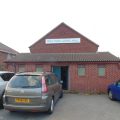
Roe Green Hall, Kingsbury comprised a main hall to one end of the building and meeting rooms and offices to the other. The existing building layout and circulation meant that the two ends of the building did not link well together. The building project undertaken sought to unify the two ends of the building through the provision of a central welcome area space. In addition to providing a new entrance and useful overflow facility, this space also offers a more open and welcoming public face to the facility which fronts onto a busy pedestrian thoroughfare.

click here for full case study