News Library

A to Z challenge – S

ID) ?>')">

afe and secure storage of materials and equipment is a key matter of any building project and a mark of a good and competent contractor. It must be said too that this is true not only on a building project but also in the use of the new property.

As has been seen in previous articles the contractor is normally “in debt” through the life of a project. Whilst a large part of this will be wages for workers and sub-contractors, the remainder will be for materials and equipment. If building materials or equipment are damaged when they are stored on site or lost / stolen this represents an actual loss to the builder and a potentially significant increased cost to the client. This increased cost takes the form of time delays whilst the lost items are replaced and the project is stopped. Today this is much more likely with the shortage of certain building materials.

Coupled to this are the increasing costs from the suppliers that arise because of the shortage. The contrast is that safe and tidy storage of materials and equipment on site contributes in large measure to both their being kept in good condition and also to their not hurting anyone. Often the hasty and clumsy storage of items can lead to these falling over or dropping, leading to their being damaged and worse, hurting someone as they fall. Interestingly this also applies to church materials and equipment when the building is finished and re-occupied.

Most readers will have seen at some point hazardous stacks of chairs in a church building that are too high, too heavy and often unbalanced. Churches normally keep too much stuff in too few cupboards and on too few shelves. Cupboards will spring open as soon as the latch is turned due to the weight of materials pressing against the door. When you meet these situations, do not walk by. Take action, even if you are a visitor to that church. Tell someone and if possible help them to take some action to address the unsafe issue there and then, if perhaps only in part with a warning notice. Safe and secure storage of all materials and equipment will go a long way to minimising the risk that anyone is hurt and that in the case of a building project, it can move forward smoothly, safely and as planned to its completion.

A to Z challenge – R

ID) ?>')">

ecommended considerations in a building project include the following:

Retention is a mechanism in the contract by which a client is legally able to protect itself at the end of project for faulty workmanship. The retention is normally a percentage of the total contract price and is retained for an agreed period – typically six or twelve six months – after which time it is paid out to the builder upon the satisfactory rectification of any building defects which have arisen during this period.

Building Insurance – Most buildings carry building insurance but insurers need to be notified in advance of the start of a building project to be sure they are on notice. This lets them make any changes to the cover or any actions on site that they require for the cover to remain valid and effective. For example, if hot working is taking place and a fire starts as a result causing damage to the property,  it can be seen that if the insurer was unaware of the building project this could cause a problem with the policy and any claim

Liquidated damages – these are damages that can arise on the project and impact the client immediately and financially. It would be normal for the client to specify the level of Liquidated Damages to cover the impact of the project running beyond the agreed contract period so that the building is unavailable for use or that no rent is payable. The sum covered will need to be agreed with the builder before the contract is signed.

Advance payment – in order to begin work on site the builder will need to buy building materials and potentially hire equipment. In some circumstances the builder may asked to be paid an advanced sum to cover this, but the amount needs to be considered in the light of both the value of the contract as a whole and the build time. Certain written Building Contracts will have a provision for dealing with advanced payments if required. Normally the remaining contract sums will be paid in arrears on submission of monthly valuations based upon works completed on-site which will include carrying forward an element of retention, as described earlier. The key to the advance payment and any subsequent payments is trust. The client must be completely RELIABLE in the paying of invoices promptly when they are submitted and approved. Delay can be very serious for a builder and the longer the delay for the larger amount of money could imperil both the viability of the builder, the project and the client / builder working relationship.

A to Z challenge – Q

ID) ?>')">

uality contractors are hard to find and even harder to hire since they are likely to be in high demand. Project teams can almost become quixotic about this and lose touch with reality. However, the speed at which building costs can rise will be one quandary that a client will be in as they decide if they can afford to wait for the “right” builder.

If a project team decide that they want to delay for a specific contractor then they need to consider other impacts that can arise. For example, keeping neighbours informed as to when building work is and is not going to start and how long it is going to take can become questionable. It carries with it a reputational risk, both for the church and for the gospel.

Another issue to consider, and which is current, can be that an architect may have specified or the planners require the use of particular building materials / finishes which today may be in good supply but at the moment that the contractor becomes available are in short supply. This will lead not only to increasing the materials price but also increasing the overall cost of the project through additional unforeseen delay as it waits for the product to become available.

Another aspect of a building project to watch quite closely is the delay between securing a planning permission and starting the project itself. This can be overlooked as the tasks of raising enough finance for a project, keeping up with rising prices and agreeing a contract with the quality builder then satisfying the pre-conditions of the permission can, in some cases, mean that the planning permission expires and has to be re-applied for before the project can start. The best way to avoid this potential quagmire is for clients to be quick-witted, once permission has been secured, to determine what quotient of time is available to satisfy all pre-construction matters and to appoint a Quality contractor.

CGT return to office

Throughout the Covid-19 pandemic we have brought to you, through our Foundations magazine, email bulletins and news articles, many stories of how our connected churches have adapted to what is now a very new and different “normal”.  In a similar vein, we at CGT also needed to adapt our way of working to ensure that we could continue to be there for our occupying churches, providing our services.  This has taken on two forms. 

Our Office 

In March 2020 our office staff moved their equipment out of the office and into their homes.  Ways of communication had to be rethought and, with the wonders of modern technology and online IT systems that had already been put in place to streamline our property management, a new way of working evolved.  It has been a learning curve for everyone, but all our staff feel that we have come out of this process with a more efficient way of working and, most importantly, we have been able to be there for our connected churches through what has been a testing time.  Our Operations Director, Garryl Willis, reflected “considering the restrictions that have been in place over the last 18 months, I have been massively encouraged in what we at CGT have been able to achieve remotely. Being back together in one place with the beautiful countryside surroundings will enable further progress to be made whilst enjoying the regular flavoured coffee and biscuits!!” 

We took on a new architect, Jonny Heaney, in September 2020 who had to wait a year to be able to meet his work colleagues face to face.  He says “Video conferencing on Microsoft Teams has been a very useful tool in getting to know the staff, but it is really nice to be able to meet with everyone in person. My dog is certainly going to miss his ‘walk-on appearances’ on screen though!” 

We have now returned to our new Covid-safe office, with hand sanitiser dispenser, reconfigured office layout to allow for social distancing and wearing of masks.  We have become very used to working virtually over the last year, communicating via Teams video meetings and calls but there is nothing quite like being together in person.  Elaine Roberts says “It has definitely been a year like never before! I have valued the use of Teams to stay in touch with other team members via its video conferencing facility and I have appreciated meeting each morning to pray for all the churches and also for one another; this has been a real blessing to me” 

Our Trustees 

Church Growth Trust’s trustees have continued valiantly all through the pandemic to meet for full Board meetings and for Sub-Committees, but all of these have been on Teams.  It has worked well in terms of them not having to travel around the country and they have all adapted to the new technology.  The last Board meeting was held in person, not in CGT’s offices, but in a local conference centre, to allow for social distancing, which concluded with a BBQ.  It was a memorable occasion to spend time together.  As Neil Walker our chairman says, “there is something special about being in the same room when important matters are being discussed.  It allows for a much freer discussion, and everyone feels they are fully participating”. 

The next meeting of the trustees is an overnight strategy meeting in October.  “We are so grateful for our trustees and their commitment to the work of CGT, giving their time sacrificially” says Giles Arnold CGT’s Chief Executive. 

Permanent base for One Church in Cleethorpes

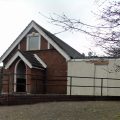
Church Growth Trust are delighted with their most recent letting of a church building in Hey Street, Cleethorpes. The property was recently gifted to the Trust by the Hey Street Evangelical Church who had closed after owning the property for some forty years. Church Growth Trust sought to let the property to a local church and One Church Grimsby expressed their serious interest in the building.

As Tom and Wendy explained, ‘We had been praying to God for a permanent base for our church for nearly fifteen years. God in his grace brought forward this building and we were thrilled and excited to have our prayers answered in being given the chance to take the tenancy of the property.’ John Duffield, Property Manager for the Trust, said “ I was so encouraged to get a text from Tom and Wendy about their first service which said “We felt at home straightaway. Nobody wanted to go home!”

It is wonderful when God blesses a faithful and patient church in this way and we pray His rich blessing on the church and its ministry to the people of Grimsby and Cleethorpes.

Dreams becoming reality – a transformed building in Whetstone – September 2021

ID) ?>')">

Oakleigh Community Church (OCC) in Whetstone, North London was planted nearly 20 years ago. In a time when there is widespread concern about dwindling congregations, this church is a real success story. Working in partnership with Church Growth Trust, they embarked on a building project which has doubled their auditorium capacity and helped them to continue to reach out into the community. OCC minister, Mike Pavlou, says: “We have been talking for many years about improving the building. As time went on, we outgrew the worship area and we wanted our church building to be more welcoming for our community. We prayed over it and waited on God, and started work at the end of September last year. CGT have been amazing, helping us to restructure our lease, giving us a grant and always being on hand to support and advise us. Building projects can be stressful, but CGT have bent over backwards to help and accommodate us. They bought into our vision, they are excited by it and wanted to see it happen.  Praise God!” 

Giles Arnold, CGT’s Chief Executive, has known Mike and the church since 2003. “We had a strong relationship from the start. After a number of years of planning, the final design was chosen. Working with Mike was a delight and our heart is always to work closely with the occupying church. We were happy to offer OCC a substantial grant from a property Trust, and to negotiate the lease to their advantage. The building is transformed and all those years of hard work have paid off.” 

The church now has a much larger auditorium and new kitchen facilities at the front of the building; a vital part of their vision. “The plan is to open up a community café which we hope will be very well-used. All our children’s and youth work is always over-subscribed, as are our holiday clubs, and we’ve got such a heart for children and families. We would love to see this new facility welcoming them in. The design includes new accessible toilets and a new heating system. Our old auditorium sat 100 people, but is now large enough to accommodate 200. The design allows it to be divided into two smaller halls for extra flexibility.” 

A to Z challenge – P – September 2021

ID) ?>')">

lanning, problems, people and perspective are all parts of a properly piloted project. Reactions to that statement are likely to be mixed. This is because it says that Problems are part of a properly run project. Those people in a project team with the least experience will not plan properly or with any rigour. When a problem arises, as it does in every single project no matter how small and uncomplicated, they will have an unreliable perspective. This is likely to make them PANIC and cause this to be spread through the whole team or they will become PARALYSED with fear so that the problem is not addressed and just gets worse. Whilst neither of these reactions are likely to be ultimately fatal to the project, using the wrong people with the wrong perspective who have not planned for all eventualities will become a big problem.   The crucial part of any building project is planning and this takes two parts – firstly is all of the advance work that is done to prepare for the project including agreement as to what is to be built, getting an experienced project manager in place, understanding the detail of a project and how much it will cost and that the builder has been properly and formally appointed.

The second part may be the Planning permission to build the project. Once all permissions, permits and contracts are in place, what is then certain is that unforeseen problems will occur. It is how they are dealt with that are the acid test of the quality of the planning, the people and the sense of perspective. If the planning has been carried out properly there will be an agreed mechanism and methodology for how to deal with problems and that, at root, will be through the people. The quality of the relationship, the experience of the personnel and the trust between the project manager and builder is absolutely key to resolving problems sensibly, at least cost and with minimum delay. This is because they are the people who have the best perspective based on their experience and on the prior planning they will have done on the project.

Get ready for the autumn

ID) ?>')">

As the autumn begins to approach, now is a good time to ensure that your annual gas safety check and boiler service has been carried out as the cooler days begin to become more frequent and your church heating begins to be switched on. 

An electrical fixed wire test should be carried out on your church property every five years (please click on the link to the Government guidelines for further information: Government guidelines – five yearly electrical inspections).  This time of the year is a good time to check that your electrical fixed wire test certificate is in date and that an electrician has carried out your annual Portable Appliance Testing (PAT). 

Although it is a little too early in the year for frosts and cold snaps, it is always worth checking for any water leaks and the location of your stopcock and to ensure that everything is in full working order.  Now is also a good time to ensure that your gutters are securely fastened and not leaking and that they are free of any debris in order to prevent water overflow once the warm summer transitions to more autumnal weather. 

Church Growth Trust have a list of known suppliers who have been used by our churches for gas and electrical safety testing and other building work.  Please get in touch if you would like further information of known suppliers in your areas by contacting us at enquiries@churchgrowth.org.uk

A to Z challenge – O – August 2021

ID) ?>')">

ccupational therapy needs to be avoided as an outcome of a building project. It is very serious if this is an outcome of the project because chances are that someone has either hurt themselves or been hurt by something during the project. Whilst the project manager and the contractor will be formally responsible for the management of Health and Safety on a contract itself, nevertheless there is a need for EVERYONE to take ownership of health and safety during the lifetime of a project, even if you are not working on it. Many work accidents have been followed by someone remarking: “I could see that was going to happen. I am amazed it has not happened before.” This shows that even if you are an observer of building work, you do have something valuable to contribute which those involved cannot see for themselves. Or it may be that someone is taking shortcuts in their work which may harm either themselves or someone else.

The key thing, just as in the story of the Good Samaritan, is not to pass by on the other side and say it has nothing to do with you. You might feel that you are going to get abuse. But the aim in all projects must be that everyone stays safe, that everyone can go home when their work finishes and come back to work the next day, or after the weekend. We do not want anyone to be hurt or worse. We all have a role to play in making sure that people are safe and that occupational therapy is not needed. It will sometimes require courage to say something to a contractor but your care, concern and action may help change working practices and prevent a serious accident.

A to Z challenge – N – August 2021

ID) ?>')">

urseries often hire church premises. A building project can present a challenge to nurseries in at least two areas. The first challenge is if the nursery can continue to operate during the building work. This can be both from a safeguarding and a Health and Safety point of view. Safeguarding will dictate the protection of children and ensure their continuous safety. Building work can be disconcerting for everyone!  It is vital to review the work planned to eliminate any chance of a moment’s inattention on anyone’s part. Checking in and out procedures too need to be resilient in the face of potential distractions. There is a need too for permanent physical barriers to be in place at all times. By the same token, any work that is taking place near where children and adults are likely to be passing and repassing needs to be risk assessed and potential hazards identified. All parents and carers need to be made aware on a daily basis for the life of the project both the risk and hazards that are present and the protection measures that are in place. This is because different people may arrive each day. A means of telling people daily what is happening is important. It is clear that the building work should be planned to reduce any interface between the work and the nursery users to a minimum, especially during the times of arrival and collection at the nursery.

The second area of challenge is where a building project includes an area due to be used in future as a nursery. In any building project there is cost / benefit analysis undertaken and a church building project is no different. Works needed to secure Ofsted approval for a nursery, such as a private designated outside play area, may be seen to have a limited benefit to a church on a day to day basis yet it will have to be paid for. This additional cost must be balanced against the witness of the church through what it offers to the community. Often the provision of a nursery is a tremendous blessing to the local community. Some nurseries may be willing to support those on low incomes in the way they administrate their nursery. Moreover the daily coming and going will give the church the ability to engage with parents and carers as they arrive and leave, perhaps by offering a café service or a breakout activity. By doing the work the church is actually giving itself the chance to show the love of Jesus to those coming to their building and to reach out to them with the Gospel. This has to be added to the balance when weighing up the costs of any building project.

Living the Passion – theme part 3 – August 2021

ID) ?>')">

The third and final part of the main theme Together for the next Living the Passion conference in October is TOGETHER FOR CHRIST. We are so excited about this event and plans are full steam ahead for the preparation for this gathering.

To book your place visit www.livingthepassion.org for an easy and quick bookings process.

A to Z challenge – M – August 2021

ID) ?>')">

oney is a vital part of any building project. A church ought to know that sufficient money is available to fund a project before going out to tender. This ensures that prices from a tender can be accepted in good time. Where projects are costly and there is not enough money already at the bank before going out to tender, work will be needed to seek the extra funds in the following order. All monies should be gifted as restricted funds to the project to make sure they are kept apart from the regular church giving.

The first step is to ask church members to give cash. For those who do not pay tax this will be a gift of money and, for those who do pay tax, a gift of money with gift aid which will increase the value of the gift by 25%. For example £80 with gift aid increases to £100. Secondly, church members can be asked to pledge to give money but only if the project goes ahead. Thirdly, members can offer a loan to the church, with or without interest, and with or without the requirement to repay it within a specified timescale. Fourthly, a regular giving scheme for church members can be set up. This could even run during the build phase of the project until its completion but this giving by individuals would be for them to give “over and above” their regular giving, not instead of.

Once all these monies have been given or pledged, the church will be able to calculate the total amount and see if there is likely to be any shortfall. This can either be met either through grant funders bridging the gap or through seeking a loan or mortgage, if this is available and viable for the church. In the case of the latter, this will have to be factored into the annual budget of the church long term to ensure that any commitment can be met. Once the picture on the money for the project is clear, tenders can then be sought with greater confidence. Ideally, tenders should not be sought in ignorance of whether a church has the money or not. That is unfair on contractors and does not commend the gospel.