News Library

Four in one day!

ID) ?>')">

Church Growth Trust (CGT) is seeing a rise in the number of properties and trusteeships it manages each year. This growth is driven by assemblies, churches, and trustees recognising CGT’s commitment to preserving independent evangelical church buildings for future Gospel use. Additionally, many small and elderly congregations are making the difficult decision to close or foresee the need to do so soon. By involving CGT, they can pass on the baton to other evangelical believers to continue the Gospel work in their locality. 

Dagenham Community Church

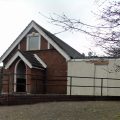
Even with the steady increase in new properties, the recent acquisition of four properties and trusteeships in a single day was exceptional. One of these properties was Dagenham Community Church, where CGT has served as custodian trustee for many years. The church decided to close and gift the property to CGT, enabling a new church to continue the Kingdom work. Kingsley Hall now occupies the property and is enthusiastic about making a Gospel impact in the community.

John Duffield, CGT’s newly retired Property Manager, stated, “We had applications from several churches, but after prayerful consideration, we were convinced that Kingsley Hall had the right vision and humility in the way they believe God is calling them to reach the Dagenham community.” 

CGT was also gifted Bishopstoke Evangelical Church, Eastleigh, near Southampton. Again, the existing church decided to close, and CGT found a new local church, Junction Church, to take over the building. Junction Church, already established in the area, is thrilled to use the new facilities at a low cost. Trish Noyce, a trustee of the old church, expressed her gratitude: “Thank you for your help, support, and just being there. I recently read your leaflet about CGT’s trustee services, and you truly ‘do what it says on the tin.’ Thank you.” 

The third property is a small rural timber chapel, where CGT had been the custodian trustee. The fellowship closed and tasked CGT with finding another ministry to use the building or to sell it. So far, no new church has been found. 

Bideford Town Mission

The fourth trusteeship involves CGT being appointed holding trustee of Bideford Town Mission, a transfer from the Fellowship Property Trust. After appointing CGT, the church decided to close and asked CGT to find a new church to take over the building. This is another challenge the CGT team is ready to face! 

CGT’s Chief Executive, Giles Arnold, remarked, “Taking on four properties and trusteeships in one day is exceptional and reflects the growing need for our services. The Lord continues to bless us with the ability to take on new properties and find new churches to occupy them when they become vacant. I am grateful for His faithfulness.” 

Ten top tips for church summer events

Organised events, such as a summer fête or concerts are a great way to celebrate the work of the church, to serve the community and bring new people into the church family. If you are considering holding an event this summer, take a moment to read our short guide.

1. Planning is key – Consider any health and safety precautions you will need to take. The level of detail of this should be proportionate to the scale of the event and the degree of risk associated with it. Most events will pose no problems, but you need to be aware of your obligations under, for example, health and safety regulations.

2. Manage it, so that it runs safely – This means ensure adequate co-ordination of the activities and monitor the precautions you have put in place. It is advisable to document your arrangements for managing safety so that everyone is aware of your plans. If you have a health and safety policy, record these as part of it.

3. Plan for all weather conditions – Since weather forecasts are not always accurate, you will need to decide how to proceed if the weather is not favourable. Do you have an indoor space you can use if needed? Consider who will monitor the forecast and make the call to move everyone inside. Consider offering shade from the sun and access to cold water.

4. Plan for incidents and emergencies – This will help you ensure you can respond promptly in an appropriate manner. Again, this will be dependent on the level of risk presented by the event. You may benefit from completing risk assessments or preparing an event safety plan.

5. Check your insurance cover is adequate – Churches regularly run fêtes and coffee mornings, and most policies will usually provide adequate cover for these. However, occasionally churches run unusual or hazardous activities such as fireworks displays or using bouncy castles.  If you are planning any events like these, let your insurer know as soon as you know the event will be happening.

6. Safeguarding – It is essential to have a safeguarding policy in place, which is up to date with the names of the key people responsible for coordinating safeguarding concerns and issues. It is also important to ensure all workers in the church have been trained on safeguarding matters and that staff and volunteers have been subject to appropriate DBS checks. To support churches we work alongside with safeguarding CGT has recently asked Christian Safeguarding Services (CSS) to review and update their briefing paper “Church and your safeguarding arrangements”. It can be viewed or downloaded here.

7. Food safety – Providing tea and cakes at events is a common activity in the life of a church. Although you will have fewer responsibilities if you only handle, prepare, store, or serve food occasionally and on a small scale, all food supplied, sold or provided at charity or community events must comply with Food Hygiene Regulations and be safe to eat.  Church Growth Trust has recently updated its briefing paper on this subject – click here to download it.

8. Promote the event – Consider your target audience and the best ways to reach out to them. You can promote your event online by sharing it on social media and in person by distributing posters and flyers. You can also promote your event locally by displaying posters in shops, leafleting at events or door knocking to spread the word.

9. Reach out to local media – You could submit an article to a community newspaper, or chat to a local radio station for their support, particularly if you are fund raising for a good cause.

10. Evaluate – As soon as possible after event day, review and evaluate the event against the desired outcomes and work out if there are any changes or improvements needed for your next event.

More information and resources

Church and your safeguarding arrangements 2022.08-Church-and-your-safeguarding-arrangements.pdf (churchgrowth.org.uk)

CGT Practical Guide: Food safely and churches – 2023-04-Food-Safety-and-Churches.pdf

The Health & Safety ExecutiveGuidance on events health and safety (hse.gov.uk)

The Cabinet OfficeOrganising a voluntary event: a ‘can do’ guide – GOV.UK (www.gov.uk)

Living the Passion 2024 – ‘Living Christ in Community’

Friday 25 – Sunday 27 October 2024, Yarnfield Park Training and Conference Centre, Staffordshire

Rico Tice, guest speaker for 2024

The ‘Living the Passion’ conference is back for 2024! The theme for this year is ‘Living Christ in Community’ and the speaker for Friday and Saturday will be Rico Tice, a well known evangelist, author and speaker.

He will be sharing from Philippians on two vital topics – ‘Alive in Christ’ and ‘Living Christ in Community – don’t drift!’

Hosted by four organisations working together in partnership – Church Growth Trust, Counties, Echoes International and GLO Europe – Living the Passion events aim to ‘fan the flames of passion for sharing the Gospel in the UK’. The Living the Passion Steering Group’s prayer is that people will come away energised, with a broader vision for sharing the Gospel.

The event programme includes:

  • Break out seminars
  • Worship
  • Children’s programme
  • Exhibition stands
  • Fellowship
  • Delicious food
  • Tea, coffee, and conversation!

Whether you are coming alone, as part of a family, with a youth group, or with friends, there will be something for everyone. Book your conference places now at www.livingthepassion.org

Our journey to a sustainable Foundations Magazine

ID) ?>')">

The paper and printing sector is one of the lowest industrial emitters of greenhouse gases. In 2016, it accounted for less than 1% of all EU greenhouse gas emissions. However, it is important when we are thinking about printing that we think about sustainability as much as possible.

And this includes our Foundations Magazine. CGT is taking significant strides towards sustainability by embracing environmentally friendly practices and responsible sourcing and production methods. We use FSC certified paper sourced from well-managed forests and ISO 14001 accredited printers.

ISO 14001 standard is relevant to all types and sizes of organisations – including private, non-profit and governmental. It requires them to assess environmental issues relevant to their operations, such as waste management, resource use and efficiency.

A notable recent initiative involves our printing partners, who have recently installed solar panels on their factory roof. This move towards self-produced solar energy marks a substantial leap in reducing carbon footprint. Furthermore, we are now printing the magazine on recycled paper, mirroring the quality while enhancing sustainability.

For those of you who receive Foundations through the post – we hope it has arrived! If you don’t, you can read it online or sign up here to receive a printed copy.

An unusual challenge in Alderley Edge

Most properties that Church Growth Trust holds are architecturally simple and relatively modern (compared to some of the denominational properties in the country). This makes the Grade II star listed Great Warford Baptist Church near Alderley Edge in Cheshire an unusual challenge, as Church Growth Trust has been appointed sole trustee of the property Trust.

Giles Arnold, Church Growth Trust’s Chief Executive, comments, “The chapel is a beautiful and interesting building. It appears that when the Trust Deed was set up for the property in 1713, the trustees took on an old timber and brick barn with an adjoining cottage and converted the barn into a place of worship. The cottage was later added to the chapel, and some modern additions have been in keeping with the historic building. The chapel still has its box pews and raised pulpit, along with a small gallery and the two-storey converted cottage has several small meeting rooms. The existing fellowship has done an amazing job at keeping the property in good condition and negotiating its way through the listed building requirements of the local Council.”

There are however challenges ahead for Church Growth Trust. Firstly the fellowship is now down to five members, three of whom are in their 90s. Finding other believers in the locality or other churches to work alongside them to help the church grow will be challenging.

This is compounded by the limitations of the building. As attractive as it is, the lack of flexibility with the worship area (the box pews cannot be removed) and the limitations on the other meeting space, means that any Gospel work carried out at the building will not involve large gatherings but is more likely to be focussed on smaller meetings.

Giles Arnold again, “Although this may limit the churches that may be interested in helping with the work, it has the advantage of each meeting being small and therefore more intimate and relational. It brings a challenge for the church using the building to seek the Lord’s specific vision for them in reaching the local community and the activities, events and meetings that will be appropriate to do so. We look forward to seeing what the Lord is going to do in this situation. No challenge is too great for Him!”

Securing the future of Malvern Gospel Hall

ID) ?>')">

Over the last few years Stewards Company Limited, a charity that Church Growth Trust (CGT) has worked closely with in the past, has given up the responsibility for holding church properties in the UK. They did not feel that they had the expertise to actively manage the properties and help the occupying churches. For this reason, they have transferred a number of the properties and trusteeships to CGT and the Western Counties and South Wales Evangelization Trust. CGT has been gifted or appointed as sole trustee for properties in Stockton-on-Tees, Edgware, Margate and High Wycombe and we have been working with the occupying churches to help them manage repairs and improvements. This has included re-roofing one building, rearranging the guttering, replacing the flat roof and improving the disability access to another and reviewing a major building project with one of the others.

Recent gathering inside the hall

The last but not least of the properties to be transferred to CGT is Malvern Gospel Hall. This is a small gospel hall that is currently occupied by Beacon Elim Malvern Church and their tenancy is being renewed. CGT’s architect Jonny Heaney has already carried out a condition survey and drawn up some sketch plans to show how the worship area can be enlarged and other improvements made.

One of the church’s pastors, Dan Bennett, comments “Although we have always had a good relationship with Stewards Company, we are already seeing the benefit of having CGT involved with the property. We see it as a dynamic relationship and one that will help to open up what God is doing in the future.”

Pastor Dan Bennett
Pastor Trudi Smyth

Giles Arnold, CGT’s Chief Executive says, “We are delighted to be able to help Stewards Company with taking on a number of their properties and, as with all of our beneficially owned and sole trusteeship properties, we are proactively working with the occupying church to help them keep the property in good condition, compliant with legislation and suitable for modern church use. We also want to celebrate and give thanks to the Lord that rather exceptionally it only took a month from Stewards Company making the decision to gift the property to Church Growth Trust for the property to be transferred. I am also grateful to Stewards Company, our solicitors Ellis-Fermor & Negus and our great staff team for enabling this to happen so quickly.”

Ten tips for making your building more environmentally friendly

ID) ?>')">

In today’s environmentally conscious era, churches have a unique opportunity to lead by example in adopting eco-friendly practices. Here are ten practical tips from Church Growth Trust’s architect, Jonny Heaney, on making your church building more environmentally friendly while easing the strain on your budget.

1 Sustainable heating solutions: When it is time to replace your traditional gas boiler, consider transitioning to more sustainable options like air source heat pumps or electric heating. Coupling these with photovoltaic solar panels and battery storage can reduce your church’s carbon footprint and lead to long-term energy bill savings.

2 Switch to renewable energy: Consider switching to a renewable energy supplier to reduce your church’s carbon emissions. Collective purchasing initiatives like Church Buying can help secure favourable rates on renewable energy.

3 Insulate your roof: Incorporating insulation into roof replacements improves energy efficiency, leading to significant savings on heating bills over time. However, it is important to check that the existing roof structure can cope with the extra weight.

Encourage pollinators into your outside space

4 Embrace native wildlife: Transform your church grounds into havens for native wildlife by planting native plants and erecting bird boxes and bat roosts. Installing water butts and maintaining natural boundaries like mixed hedges can further enhance the ecological value of your church grounds.

5 Efficient lighting solutions: Switching to energy-efficient lighting can be a quick way to reduce energy consumption. LED bulbs last longer and use significantly less energy than traditional incandescent bulbs. Additionally, consider installing motion sensors or timers to ensure lights are only on when necessary.

6 Implement water conservation measures: Simple measures, such as installing low flow taps and toilets, can significantly reduce water consumption. Additionally, consider collecting rainwater using strategically placed water butts to irrigate church gardens or maintain outdoor spaces.

7 Eco-friendly building materials: Opting for sustainable materials like recycled steel, reclaimed wood, and low-impact concrete contributes to a more environmentally conscious building. These materials not only have a lower carbon footprint but also often prove to be durable and cost-effective in the long term.

Installing a solar cell on a roof

8 Invest in renewable energy technology: Integrate renewable energy technologies like solar panels into your church building. It is worth investigating the government incentives and grants that are available to make it a more financially viable option.

9 Educate and involve the congregation: Creating an environmentally friendly church involves the active participation of the congregation. Educate church members on sustainability and encourage practices like carpooling and community clean-up events to encourage environmental stewardship.

10 Conduct regular energy audits: Regular energy audits help identify areas for improvement, leading to ongoing cost savings and reduced environmental footprint. Taking a proactive approach allows you to address issues promptly and optimise the performance of your church building.

More useful information

Energy Saving TrustAn independent organisation offering free advice on becoming more energy efficient.

HMRC – Search for ‘VAT energy-saving materials relief’ to find details of VAT relief available for churches using energy saving materials.

Church Buying – Secure favourable rates on renewable energy through this collective purchasing initiative.

Ethical Property Foundation – An energy consumption survey is available for you to review the energy usage of your building.

Faith is rewarded by a faithful God: A new building project in East Cowes  

Clarence Road Evangelical Church, East Cowes on the Isle of Wight is a small but very welcoming congregation of locals who meet in a 1930s church hall with Victorian anti-rooms, a larger church building having been demolished and turned into housing some time ago.

Church Growth Trust (CGT) were gifted the building nearly five years ago and have worked closely with the church to make improvements to the building. Giles Arnold, CGT’s Chief Executive met with the church in 2018 and discussed possible ways that CGT could help with a building project. He says, “I was so impressed with their level of faith in God and His provision. Even though they are not large in numbers or a wealthy congregation, they believed that God would provide for them with the work that was required to the property. And their faith has been rewarded.”

The original building with the sloping street

The present project has grown out of the need for wheelchair access and a better entrance. When Giles first visited, he was presented with a problem with no easy solution. He and John Quinlan, a consultant architect who works with CGT, concluded that access had to be formed partway up the hill to enter the meeting hall at the right level. Initial ideas of providing wheelchair access throughout the building were found to be too costly, but an affordable scheme concentrating on the hall and entrance area has been designed.

John Quinlan states, “I am sure that the scale of project for such a small congregation has been daunting, and no doubt demoralising as we worked on scheme after scheme, reducing down from the first ideas. But I have seen Clarence Road Evangelical Church being constant in their faith that, with sensible stewardship, they can rely on God to provide. The value of CGT’s support to the church and to me, the architect, has been considerable.  Without it, I think the project would not have got off the ground.”

Funds for the project have come from sacrificial giving within the fellowship, help with architectural fees from Church Growth Trust and two sizeable grants from a closed Gospel Hall and another Christian charity. The unexpected timing and generosity of these has been such a blessing to the church.

After five years of planning, the project has started. A small firm of builders have been appointed; a firm where it is becoming apparent that the majority are Christians; another provision from God. The work started in January and will be completed in six more weeks. Not only will there be a new level and more welcoming entrance, fully accessible WCs, a new kitchen to serve the main meeting room/worship area and better lighting, insulation and carpeting in the worship area, but the rear three storey part of the building will have some essential repairs carried out as well.

Selecting what you want to receive from us

ID) ?>')">

You may have noticed that the emails we are sending to you have changed. We want to stay in touch with you, but it is important that we do this in ways that you find helpful.  

We want to give your more choice over the information you receive from us so, we have created a range of emails updates covering different topics: 

News update – about legal & charity matters 

Available properties – church buildings that we are letting 

Tip of the month – advice for managing your church building  

Church focus – to encourage and inspire 

Update your preferences from your email bulletin

Here is how you can choose which of these emails you would like to receive by updating your preferences in our preferences centre.

  1. Open a recent CGT email bulletin
  1. Scroll to the bottom and click ‘Update your Preferences’ (next to the unsubscribe link). This will take you to our email bulletin webpage 
  1. Click the ‘Email me a link’ button  
  1. A secure email will then be sent to your inbox containing a link to your details 
  1. Click the ‘Update your preferences’ link in the email 
  1. Select the information that interests you 
  1. Use the ‘Update Preferences’ button to save your settings. 

You can update your preferences or unsubscribe at any time using the link at the bottom of every email we send to you. You can also change your preferences as many times as you like!  

Embracing the Easter spirit – the latest selection of church resources 

As Easter approaches, the spirit of renewal and celebration permeates the air! At Church Growth Trust, we have been looking for some of the best Easter materials that will add a touch of warmth, reflection and fun to your celebrations this year.   

Wishing you a blessed and joy-filled Easter celebration! 

1. Free download from Scripture Union – Hot of the press for 2024 the new resource Easter Matters from Scripture Union equips you to share the Easter story. Discover what Easter looks like around the world, read articles from their experts and get some fresh ideas to help you share the message of the cross. Easter Matters | Scripture Union 

2. Have a ‘Messy’ Easter – There are a host of ideas for Easter from the Messy Church movement this year. Their website is a great place to go to grab some new ideas or store them away for another year. Summary of Easter resources – Messy Church: Messy Church (brf.org.uk)

3. An Easter devotional for young people – What is Easter? Why celebrate it today? This is a 20-minute Easter devotional that will help young people prepare their hearts and minds to celebrate the real meaning behind Easter. Easter-Devotional-1.pdf (yfc.co.uk)

4. Say it with animation – A delightful new animation from The Bible Society, that is perfect to show in your church, particularly for primary school ages. The Awesome Easter Surprise resources – Bible Society

5. Get creative – The all-age ‘All Resource Easter’ pack is another great resource from Scripture Union. A fresh, new, jam-packed resource full of creative ideas for celebrating Easter in an all-age context.  All Resource Easter (scriptureunion.org.uk)

6. Dig deeper into the resurrection story – The Resurrection Edition of Rooted, Bible Society’s devotional journal, takes you deep into the Bible with reflections, activities, and questions. Rooted Resurrection – Shop – Bible Society

7. Keep going into Pentecost – You are not thinking it all ends on Easter morning, are you? When Pentecost Sunday comes, get all ages of your church involved by staging the Bible Society’s Pop Up Pentecost Family Service. You can download the script for free.

8. Give Easter eggs with meaning – Out of the 80 million Easter eggs sold in this part of the world every year, The Real Easter Egg is the only one that has an Easter storybook in the box, is made of Fairtrade chocolate and supports charitable projects. The Meaningful Chocolate Company

9. Let Lego help tell the story – Children (and adults!) love Lego and will be fascinated by watching it come to life in this wonderfully engaging video. Although this is not new, it is a great piece to share in children’s groups and all age services to get children thinking about, discussing and interacting with the Easter story in a fresh way. https://gochattervideos.com/downloads/the-lego-easter-story/

Preserving history and ensuring safety: Restoration works in Lewisham

In the heart of Lewisham stands Loampit Gospel Hall, a modest three-story testament to the Gospel and worship. Within its unassuming brick walls lies a history steeped in devotion, built for the Presbyterian Church of Wales in 1901 and then occupied by the Open Brethren since the 1920s. However, recent signs of wear threatened to compromise its integrity. Yet, in the face of this unforeseen challenge, Church Growth Trust (CGT), as the Sole Trustee of the building, took decisive action to secure its future.

A routine survey visit to the property unveiled signs of structural strain: cracks snaking through the parapet walls and the slow lean of disused chimney stacks. Swiftly, CGT enlisted the expertise of chartered surveyors to assess the extent of the damage and prescribe remedial measures. The verdict was clear: action was imperative to halt the progression of the issues and to make safe the building.

Initially, an alternative solution was considered, contemplating the removal of the parapet walls in favour of a more contemporary gutter detail. However, this proposal was met with resistance from the Local Planning Authority, citing the architectural significance of the parapet walls. Thus, the focus shifted to repair, ensuring the preservation of the building’s heritage.

CGT arranged the works, beginning with the preparation of drawings and a schedule showing the extent of the work required. The next stage was sourcing specialised contractors capable of executing intricate masonry repairs. Despite the challenges of finding suitable expertise, perseverance prevailed and collaboration was forged with a specialised yet competitively priced contractor.

Erecting an extensive scaffold spanning neighbouring rooftops required delicate negotiations with adjacent property owners. Yet, the spirit of cooperation prevailed, with neighbours giving CGT written consent that the scaffold could be erected.

As work commenced, safety considerations extended beyond the physical structure to encompass the well-being of occupants and passersby. Coordination with building insurers and adherence to regulatory guidelines ensured a comprehensive approach to risk management. The scaffolding design did not intrude onto or over-sail the public footpath or highway and as such a permit was not required to be sought from the Local Council.

Amidst logistical challenges and inclement weather, progress persevered. Frosty conditions threatened to stall momentum, yet innovative solutions and meticulous planning from the contractors ensured steady progress.

In reflecting on the completion of the Loampit Gospel Hall restoration project amidst challenging circumstances, CGT Chief Executive, Giles Arnold, expressed heartfelt gratitude to the Lord. He remarked, “The success of this project, achieved in the face of considerable challenges, is truly an answer to prayer. We are immensely thankful for the Lord’s provision with contractors and funds, as well as the dedication of the whole team, and the cooperation of the assembly who occupy the Gospel Hall and the neighbours.”

With this spirit of gratitude, Giles concluded, “As we witness the successful completion of this project at Loampit Gospel Hall, we give thanks to God for guiding us through every challenge. His grace has been evident at every turn, and we are excited about the renewed opportunities for the occupying assembly to serve and witness to their community that the restoration work will enable.”