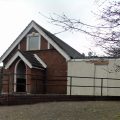
In the last few months Church Growth Trust has taken on two new properties. Although they are both church properties, they are very different. The first is literally down the road from Everton Football Club’s grounds and is in an area of high deprivation in Walton, Liverpool. This is Spellow Lane Church (or “Church in the Middle”) and is a decorative brick structure built in the 19th century for a Welsh Calvinistic congregation.
It is in need of major refurbishment, not only to deal with a roof that continues to cause problems, but also to modernise the building to make it suitable for modern church use and reaching the local community with the Gospel. Church Growth Trust has already commissioned a feasibility study from a local architect and has agreed with the occupying church plans for changing the layout of the building. This will make the building more open and welcoming, fully accessible for people with disabilities, multi-functional for worship and community activities, and cost and energy efficient. The church is delighted with Church Growth Trust’s proactive approach and are already looking at ways of raising funds for the work.
The second property is Ebenezer Baptist Chapel, which is near the city centre in Chester, surrounded by businesses and expensive flats.
The building is modern, with the majority built in the 1960s and extensions added and refurbishments carried out within the last 15 years. It is in good condition and already very suitable for modern church use. The church is also delighted that Church Growth Trust will be involved with the property, giving guidance on building and compliance issues.
Whereas Spellow Lane Church was gifted to Church Growth Trust from local trustees, Ebenezer Baptist Chapel has had to be a sole trusteeship, as there is an ultimate beneficiary to the property Trust. FIEC Limited were the previous trustee, but, as with other properties, they are asking Church Growth Trust to take on the management of the property, because CGT has the expertise to do so.
As we end another year, the whole staff team at Church Growth Trust are grateful for all the amazing achievements during 2019 year and we want to rejoice and share some of these with you.
12 Tip of the Month articles
9 new church lettings
8 new church properties
3 completed church building projects
2 Research staff
2 staff training days at Launde Abbey
1 new Property Administrator
1 new Marketing Consultant
1 new Chairman
Church Growth Trust staff team (left to right – John Duffield, Mandy Harris, Carol Brown, Gill Pedler, Garryl Willis, Elaine Roberts and Giles Arnold)
Thank you for your support and encouragements during 2019 and we look forward to 2020 and many future years helping and providing the support you need.
Now is a time of year when going into a church building can present something of a hazard, especially if you are opening it up for the first time. Where is the lock and when you get in the building, where are the light switches?
Many churches find that outside lights, whether operated by switches, timers or movement sensors, are vulnerable to vandalism of one form or another meaning that other solutions are called for. Whilst most mobile phones do have torches, they are somewhat unwieldly. Using mobiles results in a juggling and contortionist act of trying to enter the building without dropping the very valuable phone whilst keeping hold of the various bibles and papers in the other hand and still having hands free to turn the key in the lock and the handle of the door, all at the same time. Solutions might include attaching a small pen torch on the key ring or using luminous markers on both the key and the lock. In some situations it may be that “borrowing light” say from street lighting is possible. It may be that this light is obscured by bushes and trees that have become overgrown and pruning these may allow sufficient light into a darkened area.
Once in the building, and without “local” knowledge, finding a light switch can become increasingly frantic and hazardous so use of luminous stickers around either the light switch plate or on the switch itself will be helpful. Indeed, this will also work in the main areas of the building as there will often need to be a mini route march from switch to switch to arrive at the main bank of light switches.
Also consideration needs to be given to getting to the fuse board in the event of a power outage – is there emergency lighting, how do you make your way to the fuse board and can you see what is in there when you get there?
Giles Arnold, Church Growth
Trust’s Chief Executive, has over the years built a close relationship with
Brian Knowles, the Chairman of Western Counties and South Wales Evangelization
Trust. They have met up regularly to
compare notes on the two organisations, which share a similar vision of keeping
independent church buildings in Gospel use.
It was therefore a great shock to Giles Arnold to hear of Brian Knowles
being called to glory only four days after Giles Arnold had, by Brian Knowles
invitation, attended the Western Counties Trustees’ Meeting.
The meeting was very positive. “I felt very welcomed by the trustees and was delighted to be able to talk about our common vision and ways of being able to work more closely together, even though we have different structures to our organisations” stated Giles Arnold. “I will miss Brian’s friendship”.
Brian Knowles will be a hard act
to follow. Although he was in his 80s,
he was carrying out the majority of the work for the Trust. Please continue to pray with Church Growth
Trust for the work of Western Counties, as the trustees make the necessary
changes over the coming months.
In 2017 Church Growth Trust helped Windmill Community Church to restore a dilapidated Victorian Chapel in Wolverhampton.
Chapel building before restoration in 2017
Since it’s opening at the end of 2017 the building has become a thriving community centre reaching the local community throughout the week and facilitating a growing fellowship for worship on Sundays.
In fact the fellowship has grown to such an extent that they already need more space and Windmill Community Church have invited us to help them with the second phase of their building project to provide another meeting room.
As a building of local interest the local planning department were keen to be involved and have encouraged us to develop the proposals into a contemporary structure that will enhance the original chapel building. Planning permission was granted earlier this year and building work is hoped to start in 2020.
Abridge Evangelical Church approached Church Growth Trust for help with their church property. They had been exploring ways to provide better wheelchair access into their building and also needed to provide an accessible toilet along with some other internal improvements. They instructed Church Growth Trust to carry out a feasibility report to explore these issues and to propose a way of overcoming them.
Gill Pedler (CGT’s Architect) visited the building and carried out a measured survey and assessment of the building.
The main entrance had a number of steps and providing a ramp here would have been difficult due to the proximity to the drive way and to the boundary of the site in front of the building.
Internally the existing kitchen was roughly the same size as a compliant accessible toilet so it made sense to incorporate the toilet within this space and build a new room for a larger kitchen that would be adjacent to the main hall and could include serveries into both adjacent areas for serving hot drinks in a safer way.
After the church had considered the proposals we agreed a scheme that would include the essential work to provide level access and wheelchair accessible toilet facility as a first phase along with some other alterations required to make this possible.
Church Growth Trust drew up the working drawings in preparation for a building regulation application and for going out to tender for quotes from local builders. The church building is used throughout the year by the local primary school and it was important that the building work was carried out inside the school holidays so that the school could continue to use the building uninterrupted. These dates were presented to the contractors at tender stage to ensure that they would be available to carry out the work within the time available.
The work was carried out within the time allocated and within budget, the church are really pleased with the finished project and the photographs featured show the different areas of the building before and after.
This is a question normally asked by a huddle of people standing in the pouring rain outside a darkened building and the organiser of the meeting has not turned up. Or perhaps, more embarrassingly, a visiting speaker or contractor has turned up but no-one can get in. There then follows a series of mobile phone calls to track down a key followed by logistical deliberation about how the key is going to be transported from where it is to the building or identifying someone who is closer.
But who has a key, if you will pardon the pun, is a key piece of information which all those with responsibility for a building should know AT ALL TIMES.
All groups, church or other, should keep a record of all people who have which keys, when they were given to them and when they have been returned. This record needs to be reviewed regularly – perhaps every six months – to ensure that keys are accounted for and produced. Whilst some will consider this to be an irritant, the discipline of keeping tabs on who has keys and that they have not lost them will ensure that you are confident that the building is secure and, when meetings are organised, who will be giving access.
In addition people who move on should return any keys they have been given and an up to date record will demonstrate this has been done.
An occupier should think carefully about the rules there should be for visitors borrowing the building and also for key holders. For example, it might be sensible to tell keyholders that they should not lend their key to someone outside the organisation. Whilst this may sound like common sense, it can often be difficult for a keyholder to decline to lend a key to a friend as they want to appear helpful. But by establishing ground rules, embarrassment on both sides can be avoided and control maintained.
Keys can also give access to places such as boiler rooms, roof areas and safes. Clearly access in these instances needs to be firmly controlled from a Health and Safety and Insurance perspective. An up to date record will demonstrate this is being done. Where valuables are involved, consideration should be given to locks which require high security keys – these can be either patented or restricted – so that keys cannot be cut at someone’s whim or for a stranger but only for someone who is authorised and has the authentication with them. Whilst this can carry an increased cost, the cost will force occupiers to think carefully about how many keys are genuinely needed and making sure they are controlled. More generally, where an organisation has lost track of who has had keys, then serious consideration should be given to replacing locks and starting again to be sure that the occupier is in control of access to the building.
Either as a DIY project or with help from local builder arrange for all gutters (especially valley and parapet gutters), rainwater pipes and gullies to be checked and cleared every autumn after trees have shed their leaves.
If children play anywhere near your premises don’t forget that a tennis ball is just the right size to block a flat roof rainwater outlet unless it has a protective grille over it.
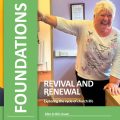
Church Growth Trust has played a major part in producing a new booklet on Church Revitalisation. The booklet is already being sent to churches across the country and will help them to consider where they are in their growth cycle and whether they need help with revitalisation.
The booklet has been written in conjunction with Partnership, who carry out Church Checks, Counties and GLO. These and Church Growth Trust are all involved in helping churches grow in different ways. They are sure that this will be used to encourage and inspire churches to consider revitalisation and to obtain the appropriate help to achieve this. The booklet contains a number of examples of different models that have already worked.
Anyone wanting a copy of the booklet can apply to Church Growth Trust’s offices on telephone 01536 201339 or email enquiries@churchgrowth.org.uk
We are delighted to welcome Elaine Roberts to the team here at Church Growth Trust this month. Elaine is commencing the brand new role within the charity as Property Administrator which is a fundamental role in the strategic growth of our work.
Too read more about Elaine and the other members of the staff team with Church Growth Trust check out our staff page
 Your Guide To Church Growth Trust’s Services
 Your Guide to Church Growth Trust’s Architectural Services and the RIBA workstages
 Increasing demand for Church Growth Trust’s Trusteeship services – April 2019
 Making the most of the summer months: A guide for Church Property Managers
 Church Growth Trust’s Custodian Trusteeship Service in demand – March 2020
 Updated Trusteeship Services booklet – October 2020