News Library

Planning permission success – November 2020

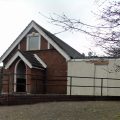
Planning permission has now been granted for the proposed works at Elmsleigh Hall, Leigh-on-Sea. The scheme proposal was to remove the existing rear ‘lean-to’ at the rear of the property which was rather unsightly and in bad repair and to replace this with a substantial modern single storey extension which will function as a meeting room and a space for children’s work for the church.

Internal reconfigurations will also see the provision of a fully compliant accessible WC, along with a new accessible level-access glazed door to the south elevation into an entrance lobby which is sized to accommodate a wheelchair tuning circle, granting onwards accessibility to the rest of the building. An additional WC is also being provided within the existing main entrance lobby to the front of the building.

Securing planning permission for the project involved constructive dialogue and working alongside the Planning Case Officer to amend the scheme design from the previous application to address the items which had previously been raised as area of concern, arriving at a solution which was fully acceptable in Planning terms and still aligned with all of the requirements of the church.

Evangelical Alliance’s Autumn Survey – November 2020

The Evangelical Alliance (EAUK) in partnership with Stewardship, has completed a second survey of the UK evangelical church during the coronavirus pandemic showing that churches are continuing to innovate to meet the needs of those who attend as well as those in their community.

Between the 1 and the 12 October EAUK received responses from more than 1,000 individuals and in excess of 450 church leaders, giving them a fuller picture of how churches are navigating the continually changing landscape, evolving laws and guidance, and the challenge of local and regional lockdowns.

The report looks at some of the high-level headlines from across the survey, and will be followed with other reports looking at different areas of the survey. Please do take a look through these reports listed below.

Changing Church – Autumn Survey Executive Summary

Changing Church – Autumn Survey Demographics

Changing Church – Meetings and Money

Changing Church – Discipleship, Evangelism and Community Transformation

Changing Church – Reflections on the way forward

UK Day of Prayer – November 2020

The Evangelical Alliance (EAUK) has called a UK day of prayer on 13 November. They are working with networks, denominations and churches to bring people together to pray. As communities across the UK face further restrictions and lockdowns, as many churches are forced to stop their in-person gatherings, as suffering and loss affect so many families, the call is to unite and seek God together in this time of trouble.

We recognise the call and need to pray at this time and would encourage you to unite with Church Growth Trust and believers across the UK in seeking God at this critical time.

Watch Gavin Calver’s call to prayer and for additional details click here

The tale of two Gospels Halls in one town – November 2020

Swindon was previously known as a the fastest growing town in the UK and is still expanding. In the 1950s the Penhill Estate in Swindon was built and children from the estate were being bused for Sunday school to a Gospel Hall in another part of the town. The Brethren assembly from that Gospel Hall decided to plant another church on the Penhill Estate and, having been gifted some land by the John Laing’s construction company, which built most of the estate, they put up the Penhill Gospel Hall.

Penhill Gospel Hall

Although they saw considerable growth and an amazing work among young people, in recent years the numbers have dwindled, and they decided not to reopen after the Covid-19 shutdown. The property has been gifted to Church Growth Trust and we are seeking a new evangelical church to take on the property and continue the Gospel work on the Penhill Estate.

Just outside Swindon in the village of Wroughton, there is another Gospel Hall. Markham Road Gospel Hall was built in the 1960s. However, the Gospel work started in Wroughton 93 years ago with a tent outreach from Regent Hall in Swindon and the present Gospel Hall replaced an old Nissan Hut previously on the site. They had a thriving assembly with over 100 children in the Sunday school, but again in recent years the assembly has declined in numbers and had a lack of leadership. They have considered whether to stop meeting, but through discussions with CGT they have been connected to Counties to see whether they can be part of a replant to bring in leadership, vision and new people to revitalise the Gospel work in the village.

Markham Road Gospel Hall

Wroughton has a population of 3,500 and is expanding with Wichelstow (a new development to the south of Swindon, which is planned to extend to the south of the M4 towards Wroughton) due to be built, with 4,500 houses. There is no church property planned for this new community. As Giles Arnold, Church Growth Trust’s Chief Executive says, “It is strategically vital that there is a strong evangelical witness in the village and we are delighted to be gifted this property in order to facilitate this happening. We look forward to working with the assembly and Counties as they plan for the future. Swindon continues to grow, but so does the Gospel work.”

Compelling vision for Westbury Chapel – November 2020

Church Growth Trust are thrilled to announce the letting of Westbury Chapel, Wolverhampton to Elim International to plant a new church in the city. The church plant will be led by Simon and Dee Woodward who are already in ministry in the West Midlands. Simon is currently Associate Pastor at Lifecentral Church which serves the communities of Halesowen, Hagley and Rowley Regis.

Pastor Mark Ryan

Discussions on the letting took place over a few months and the letting process was extended because of the Covid 19 crisis. Pastor Mark Ryan, Senior Leader at Birmingham City Church and a pioneer church planter, said “We have been praying to the Lord for a place to establish a church in Wolverhampton for over fifteen years and now He has answered our prayers. Simon and Dee are looking forward to serving God and the community in Wolverhampton in the days that lie ahead. The letting process has been drawn out because of Covid 19 but it has been great working with Church Growth Trust to get the tenancy in place.”

Speaking for Church Growth Trust, Property Manager John Duffield said “Mark and his team set out a compelling vision for their use of the property and a genuine commitment to carry on the great work that the Tabernacle, the previous tenants, had been doing of progressively enhancing the building. We pray God’s rich blessing on Elim’s ministry to Wolverhampton.”

Advice on regular maintenance items for churches currently under lockdown

Given the current restrictions due to the Covid-19 pandemic, many church buildings will be unoccupied for potentially long periods, and as such emphasis should be placed upon putting various measures in place and conducting certain checks to ensure damage is not occurring to the building fabric.

A general note is that all churches should inform their Building Insurers that the church building is currently not being occupied and provide them with any information required to ensure that their cover remains valid. The insurers may want confirmation that there is a designated person who will be carrying out routine visits and inspections of your property.

Many members of your church may live locally and as such will often be passing the church premises on their daily activities.  You could ask these members, if they visually pick up on any notable issues to the external appearance of the church building which cause concern, they should relay these concerns to a designated person/keyholder.

It is recommended that routine inspections of the church property and items of routine maintenance should, if possible, be carried out by one designated person, rather than multiple people.  This limits the risk of cross-contamination with numerous people touching door handles and using the toilet facilities etc.  If duties do have to be shared, care should be taken to thoroughly disinfect surfaces touched prior to use by the next person.

The below is a non-exhaustive list of items that should be checked on these regular visits, broken down into external and internal building items:

External Items
  • Inspect guttering and downpipes to check for visible blockages. If it is raining during the visit and there is any water coming over the edge of the guttering rather than discharging freely into the downpipe then there could be a blockage in the gutter which may need clearing out.
  • If the building has a slate or tile roof, a quick visual inspection from the ground should indicate any slipped slates/tiles. Additional visual inspections of slate/tile roofs may be required after particularly high winds, and, if there is any slate debris found on the ground, this could indicate issues which may need remedial work.
  • Visually check flashing locations (at roof abutments with walls etc.) to ensure that all flashings are intact.  There is quite a prevalence of lead flashing being stolen from notably unoccupied sites in recent times, given the perceived high market value of lead.
  • Visually inspect external walls for any obvious defects such as cracks, deep erosion, or missing pointing to joints. Checked the bases of walls to see if there are any signs of rising damp.
  • Check low-level vents in external walls (such as air bricks) to vent the internal floor void to ensure that they are not blocked or broken (which may allow rodent access).
Internal Items
  • Check the water and heating system pipework for any obvious evidence of leaks.
  • If the central heating system is oil-fired, ensure that the levels of oil have been dipped to ensure that there is adequate supply and no risk of running out.
  • Keep the heating system running either at a constant low level, or on cycles on a thermostatically controlled or timed basis. This should ensure that the building temperature does not drop to levels which would be detrimental to the building fabric over a long period or cause frost damage and burst pipes.  If adequate heating cannot be provided, heating and water systems should be drained down.
  • Visually inspect plaster to walls and ceilings for any damp patches, which could be indicators of issues to be explored.
  • Flush all toilets weekly and run taps in basins for a few minutes to avoid the risk of legionella.
  • Keep kitchen areas free of perishable food items.  This would include ensuring the fridge is kept clear.  If any non-perishable foods are being kept within the kitchen, they should be stored in sealed containers within closed cupboards.
  • Conduct a general check to see if there is any evidence of rodents or other pests (e.g. with droppings etc.).  If there is any evidence, conduct a check to see if it is evident where the source of any infestation is, and traps may need to be laid, or if a persistent problem, a specialist contacted.
  • Ensure that background ventilation systems are working effectively where present, including leaving trickle-vents to windows in the open position.  This in combination with the running of the heating system intermittently should help to prevent issues of damp, condensation or mould.
  • Check all hand sanitiser dispensers and fill/replace as necessary.
  • Vacuum carpets at least once a month to try and keep spaces dust free.
  • Check the fire alarm once a week, and check any local smoke alarms and replace batteries as necessary.
  • Check the intruder alarm and give any monitoring security company the contact details of the designated person, who is generally attending the church premises to conduct inspections.

Sources:

Church of England – Securing & Caring for your Church Buildings during the Covid-19 Pandemic.

Historic England – Maintenance Plan for Older Buildings.

New lockdown in England – the effect on places of worship – November 2020

The Government in England has announced a new lockdown from 5 November until 2 December 2020.  This means that you will not be able to use your church building for public worship or other activities, with the following exceptions:

  • Funerals can be attended by a maximum of 30 people, plus those that are working, and it is advised that only close friends and family attend. It is also still possible to hold commemorative events, such as a wake or memorial service, providing no more than 15 people are in attendance (plus those working) and gatherings should not take place in private gardens or houses.  Social distancing should be maintained between people who do not live together or share a support bubble.
  • To broadcast acts of worship – it is assumed that this will include those leading and any technical crew (sound, cameras etc).
  • Individual prayer.
  • Formal childcare or where part of a school.
  • Essential services, such as food banks.
  • Other exempted activities such as some support groups – up to 15 people are allowed to meet in a public space, which can include your church building.

Weddings will not be permitted to take place except in exceptional circumstances, but it is unclear what these exceptional circumstances are.  Small prayer and bible study groups and baptisms will not be allowed.

Are places of worship affected by the new tier levels and the Welsh “Firebreak”? – October 2020

New Tiers

The Government in England introduced on 12 October the new tier levels, with local Covid-alert levels at medium, high and very high.  In all levels places of worship can still be used for worship meetings and other types of gatherings as set out below:

  • Communal Worship – Limits on the numbers attending communal worship will depend on the capacity of the place of worship and an appropriate risk assessment being carried out.  With medium level alert areas people must not mingle in a group of more than six (other than those they live with or have formed a support bubble with).  In high or very high alert level areas people must not mingle with anyone they do not live with or have formed a support bubble with. 
  • Marriage Ceremonies – These are now limited to 15 people, plus those that are working (i.e. the person conducting the ceremony).  Attendees should socially distance from anyone they do not live with (unless they are in their support bubble).
  • Funerals – The limit is still 30 people, plus those that are working, with the same restrictions as with weddings.  It is also possible to hold commemorative events, such as a wake or memorial service, providing no more than 15 people are in attendance (plus those working) and gatherings should not take place in private gardens or houses.
  • Support Groups – If support groups are organised by a charity, up to 15 people are allowed to meet in a public space, which can include your church building.  This is allowed in all tiers.
  • Small Prayer and Study Groups – These would work on the same basis as communal worship within a place of worship or the grounds of a place of worship.
  • Full Immersion Baptism – There is guidance now to allow the full immersion baptism, but the person being baptised needs to be at least 2 metres away from the congregation.  Only one person should be baptised at any one time with one person attending to them.  The person helping can place their hands on the head of the person being baptised, but should not “cradle” the person or touch them in any other way and should wash their hands after each person is baptised or use a hand sanitiser.
Welsh “firebreak”

In Wales from 23 October to 9 November places of worship have been closed for any gatherings other than funerals and weddings.  Up to 30 people (plus those working) can attend funerals and weddings, providing there is adequate space (inside and outside), but wakes or memorial services are not permitted. 

A revised version of the paper “Coming out of Covid-19 – opening up church buildings for worship” is available on our website.

Updated Trusteeship Services booklet – October 2020

Everything we do we want to do well, and reviewing and updating the resources available for you to benefit from is one area where we focus our time and effort.

We seek to improve what we offer and the review of our booklet ‘Your Guide to Church Growth Trust’s Property Trusteeship Services’, where we share what we can do for you, has been recently updated both for download and printed booklet.

To view or download our update booklet, go to our ‘Your guide to…’ page on our website. Or to request a printed booklet email enquiries@churchgrowth.org.uk requesting your own copy.

NEW Briefing Paper – October 2020

We are focused on providing you with the most relevant resources you need relating to your church property. With over 30 briefing papers available to download and read, we are delighted to publish a new briefing paper on “The Equality Act – making church buildings fully accessible”.

This has been created to help you understand your responsibilities and give examples of good practice for making your buildings fully accessible for people with disabilities.  It can be found here.

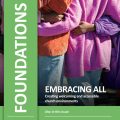
The latest edition of our Foundations magazine features our latest Briefing Papers, ”Coming out of Covid-19” series, and “The Equality Act – making church buildings fully accessible”.

If you do not already receive our Foundations magazine sign up here to receive this and all future editions.

Foundations Magazine – Spring 2020

NEW Foundations magazine – October 2020

We are always excited to share news about our Foundations magazine with you and delighted that the Autumn 2020 edition is now being sent out.

This edition features some interesting, useful and encouraging articles from hearing how two churches have journeyed through Covid-19, some great missional stories of churches who run and support community garden projects, and a celebratory article of Church Growth Trust’s journey over the last 10 years from a dining room table to The Barn.

If you have not received your copy or want additional magazines to send to your connected church leaders, please get in touch, email enquiries@churchgrowth.org.uk or call 01536 201339 to request your extra copies.