News Library

Disability access – are you doing enough?

Most churches will be aware of the Disability Discrimination Act 1995, which is now part of the Equality Act 2010, but many do not know the extent to which the Act affects their fellowships.  You as a church provide services (not just your Sunday meetings, but other activities) for the public and are therefore considered to be service providers under the Act.  You are required to make “reasonable adjustments” for people with disabilities, such as providing extra help or making changes to the way you provide your services.  You are also required to make “reasonable adjustments” to the physical features of your premises to overcome physical barriers to access. 

Although these adjustments should have taken place 16 years ago this month, many churches have still not taken action to make reasonable adjustments!  And many think that one-off provision of an accessible WC or a temporary ramp is enough. 

There are many practical changes that you can make to your church building that will enhance the facilities, be more welcoming and be more comfortable for all people.  You can do so much to facilitate full participation by everyone, including people with disabilities.  For example:

  • Provision of level access and lightweight doors means parents with pushchairs and elderly people benefit, as well as wheelchair users.
  • Good lighting benefits people who are deaf, have hearing impairment, are lip readers, are partially sighted or are elderly.
  • Good colour contrast (between ceiling and walls) helps visually impaired people to get a proper perspective on the size of the room and can be an attractive design feature.

Even where you think you have provided facilities and made reasonable adjustments, there are always areas that can be improved.  These could include:

  • Providing an accessible parking space(s) near the entrance and making sure edges or drops in level in the car park and grounds are clearly marked.
  • Making sure any ramps are compliant (e.g. not too steep) and there are handrails fitted to steps, as well as making sure there is a platform and space at the top of ramps to allow doors to be opened.
  • Regularly checking to remove or clearly mark any obstacles at low level or not easily visible, to help people with partial sight not to trip, and that access routes are not blocked for wheelchair users.  Unnecessary mats, misleading colour schemes or unnecessary changes in levels should be avoided on access routes.  Fire exits and WCs should be clearly signposted.
  • Providing an alarm for your accessible WC, ensuring the toilet door opens outwards (in case the person falls over in front of it) and that you have located the basin near enough to the WC, installed the correct rails and have a colour contrast between the rails and the walls.
  • Having someone at the entrance to welcome and help people with disabilities to enter the building.  There should be adequate preparation, ensuring the lights are working, the entrance and other areas are lit properly, large print books are available, having pencil and paper ready for communicating with people who are deaf, spaces for wheelchair users are cleared etc.  Any special arrangement in relation to Covid-19 should also be considered in advance.
  • Checking there is a consistency with signs around the building and that they are placed at an appropriate height on the wall, so that wheelchair users can read them, as well as good use of symbols, as these are easy to understand, and a mix of upper and lower case for people with dyslexia.  The lettering should be contrasting with the background and not cluttered.

Church Growth Trust has a number of briefing papers on some of the above subjects and have just published a new briefing paper on “The Equality Act – making church buildings fully accessible”, which is designed to help you understand your responsibilities and give examples of good practice for making your buildings fully accessible for people with disabilities.  It can be found here

Good colour contrast (between ceiling and walls)

Making sure any ramps are compliant (e.g. not too steep) and there are handrails fitted to steps, as well as making sure there is a platform and space at the top of ramps to allow doors to be opened

Example of an accessible WC

New Architect – September 2020

We are delighted to announce and welcome Church Growth Trust’s new Architect, Jonny Heaney to the staff team.

Jonny Heaney – Church Growth Trust’s new Architect

Jonny joins the team in September with over 13 years of Architectural experience and we are really excited to have Jonny join us in this new season.

Jonny is married to Emma and they live in Ketton, Rutland along with their cocker spaniel Clyde. Jonny is a Chartered Architect. He attends his local Church in Ketton and is involved with the village volunteering scheme. In his spare time Jonny enjoys hill walking with his wife and dog, as well as going on trips together in their camper van.

Jonny comments that “My hope is that through this role I can be of service to enhance the Church buildings that CGT are working with, helping to ensure that they are both safeguarded for their use and fit for their purpose as places of modern worship”.

Property Insurance UPDATE – September 2020

We have recently received this update from our insurance brokers in relation to property insurance.

‘In the light of emerging Government Regulation in connection with the ongoing Covid 19 Pandemic we have agreed further guidance in connection with your insurer, Ansvar. This Guidance is effective from the 1 September 2020.
 
The Guidance relates to properties which have been temporarily closed due to the Covid 19 Regulations and there is the expectation that normal activities will resume once restrictions allow. In the case of permanent or long-term closure unrelated to the pandemic please email your usual contact with details of the changes.
 
In addition to this policy guidance we also strongly believe that it is in your long-term interest to have at least a weekly inspection of the property insured. The inspection alone however does not constitute occupancy in terms of the insurers requirements.
 
WHEN IS A CHURCH PROPERTY CONSIDERED OCCUPIED
 
The Church should be occupied as outlined below, at least once every 30 days

* A regular monthly Service being held
* Where a Service is not held, if there is occupancy during the 30 days for Church activities which can include:
– Administration work
– Open for prayer
– Running on-line services from the Church
– Preparing the Church for re-opening
– Cleaning, repairs or remedial work

    
WHAT TO DO IF YOUR PROPERTY DOES NOT MEET THE ABOVE GUIDANCE
 
The above Guidance applies from 1st September 2020. Therefore, if you cannot meet the requirements after 1st September 2020 (or one month after the property becomes unoccupied, if later) you should immediately: 

* Notify us by email to your usual contact or enquiries@edwardsinsurance.co.uk
* Confirm the date the property became unoccupied
* Actual/Anticipated occupancy date
* The reason(s) for the un-occupancy  

Once unoccupied it is usual that: 
* Where the un-occupancy is solely Covid 19 related a premium increase is unlikely to apply where there are plans to ultimately reopen
* Cover is restricted
* The policy excess for property damage claims increases
* Additional policy conditions apply

Any further questions on this please do contact enquiries@churchgrowth.org.uk or ring 01536 201339.

Churches still allowed to meet for worship with new restrictions – September 2020

With the announcement by the Government that from 14 September 2020 social gatherings would be limited to six people, churches have been concerned that this will force them to close again, just two months after they were permitted to reopen for worship. However, gatherings for worship in places of worship are included in the exceptions to the six-person rule.  The Government guidance issued on 9 September 2020 sets out:

“Places of worship can stay open for services for more than six people. However individual groups of more than one household or support bubble must not exceed six people.  You should limit your social interaction in these venues to the group you are attending with.  Strict adherence to social distancing is strongly advised and a distance of two metres (or one metre with additional Covid-19 Secure measures in place) should be kept from people you do not live with wherever possible.”

Church Growth Trust previously produced a briefing paper to help churches wanting to start worshipping again in their buildings and this has been updated to take account of recent changes (last updated on 14 August 2020).  It can be found here.

New Tenancy for Bethany Gospel Hall, Crewe – September 2020

Church Growth Trust are delighted to announce that Cornerstone Church, Crewe have just taken the tenancy of Bethany Gospel Hall, Pyrus Avenue, Crewe.  Completion of the tenancy was delayed by the onset of Covid 19 but Church Growth Trust and Cornerstone remained in close contact throughout to bring the tenancy to a successful conclusion. 

As Rev’d Matt Guest says, “Our Trustees remained committed to providing Cornerstone with a building where we could meet in the heart of the community we are looking to serve and where we can reach out with the Gospel.  Bethany Gospel Hall is ideal for this purpose and gives us a wonderful opportunity to do this practically and flexibly.” 

Speaking for Church Growth Trust, their Property Manager John Duffield said, “It has been so encouraging to hear Matt’s vision for the building and Cornerstone’s heart for outreach. We pray earnestly that God will richly bless their ministry.”

7. Singing and wind instruments – August 2020

Singing and wind instruments

You should avoid singing and using wind instruments. Instruments such as pianos, organs or guitars are permitted. The government also make the suggestion of using recordings of worship music, but worshippers are discouraged from singing themselves. One person can sing if leading, but should ideally do this behind a plexi-glass screen (as protection and because it is easy to clean).

For more information and guidance about opening up your church building check out our recent briefing paper ‘Coming out of Covid-19 – opening up church buildings for worship’

Live Streaming of Church Services

During the lockdown restrictions across the UK over recent months it has meant that churches have had to work quickly and creatively to find ways to remain connected during this season when congregations have not been able to physically meet together.

Many churches began to record their services and broadcast them using platforms such as YouTube, FaceBook and Church Online (churchonlineplatform.com) as well as connecting via Zoom and other video conferencing facilities.  An unexpected outcome has been that a number of churches have found that people who would not normally visit their services in person, were logging on to watch services and that attendance had actually risen during the Covid pandemic.

Live streaming of church services used to be the preserve of the larger, well known churches, but as a result of the success of recorded services, many smaller churches are seriously beginning to explore the possibility of live streaming their services once congregations are able to start meeting together, in order to reach people who are exploring Christianity but don’t feel ready to visit a church in person.

Although it is possible to record and upload services via a smart phone, this may not be the long-term answer if churches want to produce live streamed material that is of a consistently good quality.  Church Growth Trust recently spoke to Steve Ashley of SA Sound Services (www.sa-sound.co.uk) who has been advising churches on audio visual fixed installations for many years and as a result of the recent Covid crisis, has been receiving many requests for help and advice regarding fixed installations for live streaming church services and events.

Steve recommended that churches consider investing in the following:

  • Two wall mounted PTZ cameras (such as the Sony wall mounted camera – SRG-300H Sony Wall mounted camera)
  • Camera controller remote control panel for up to seven installed cameras (such as the RM-IP10 Sony Camera Controller – Sony Camera Controller RM-IP10)
  • Streaming mixer (for example the Roland VR1-HD Roland VR1-HD) for words, and power point graphics with a USB output for connection to a streaming computer to upload to a streaming platform such as YouTube or FaceBook.

The approximate cost for purchase and professional installation of an entry level streaming system such as this is around £8,000 and although this may be a significant financial investment, churches who are exploring the possibility of regularly broadcasting their services via one of the online platforms may wish to investigate this further.

Feasibility Study – Chorley Community Church

Chorley Community Church – The original part of the building was constructed in 1937 as part of the London Based North East Gospel Mission headed by William Chorley. It was later extended to the rear in 1953 and since then the building has remained largely unaltered. In 2019 Church growth Trust were asked to help the church find the best potential for the building and to provide a feasibility study that would enable the church to communicate their ideas with third parties to raise awareness of the potential building project and assist in grant applications.
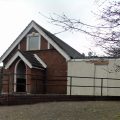
Click here for the full case study detail

6. Breaking of bread – July 2020

Breaking of bread (communion) and use of shared items

Communion is possible as long as you do not share the same bread and drink from the same receptacle, even when they are given out. There should be individual items and no contact between people. One option is to ask church members (households) to bring their own bread and wine/juice in suitable and closable containers.

Communal or shared items, such as bibles or song books should be avoided where possible; ideally with worshippers bringing their own if they can. Otherwise, these items should be quarantined for 48 hours afterwards. Using overhead projectors/screens or providing single use items, such as service or song sheets, is recommended.

For more information and guidance about opening up your church building check out our recent briefing paper ‘Coming out of Covid-19 – opening up church buildings for worship’

5. Hygiene and cleaning – July 2020

Hygiene

On entering and leaving a place of worship, everyone, including staff, should be asked to wash their hands thoroughly for at least 20 seconds using soap and water or to use hand sanitiser if hand washing facilities are not available. Public Health England posters should be displayed to build awareness of good handwashing technique, the need to increase handwashing frequency, avoid touching your face and to cough or sneeze into a tissue which is binned safely, or into the crook of your sleeved arm if a tissue is not available. You should provide hand sanitiser in multiple locations in addition to toilet facilities and appropriate bins.

Cleaning

All surfaces, especially those most frequently touched such as door handles and rails, should be regularly cleaned using standard cleaning products. Sufficient time needs to be allowed for this cleaning to take place, particularly before reopening for the first time. Frequently used objects, surfaces or spaces, including for example doorways between outside and inside spaces should be given particular attention when cleaning.

For more information and guidance about opening up your church building check out our recent briefing paper ‘Coming out of Covid-19 – opening up church buildings for worship’

4. Preparing for reopening – social distancing – July 2020

Social distancing

Guidelines on social distancing should be followed for your place of worship, including:

  • Where possible, adhering to social distancing of at least 2 metres or 1 metre with risk mitigation (where 2 metres is not viable) between households.
  • For frequently used places, marking areas using floor tape or paint to help people maintain social distance.
  • Avoiding any face-to-face seating and improving ventilation (e.g. by fixing doors open where appropriate).
  • Closing non-essential social spaces.
  • Introducing socially distanced queuing systems so the flow of groups in and out of the premises can be carefully controlled, reducing the risk of congestion or contact.

Other things you can do to help with social distancing could include:

  • Introducing a one-way flow in and out of the premises with appropriate floor markings or signage, with restrictions on accessing non-essential areas. At the end of worship time, this could include worshippers leaving one row at a time (or waiting to be instructed by stewards), in order to prevent crowding at entry or exit points.
  • Multiple entry points could be opened, and clear signposting or assistance could be offered to guide worshippers and to avoid congestion.
  • Staggering arrival and departure times will reduce the flow at exits and entrances.
  • Consider introducing a booking system to control numbers. You may want to consider how prioritisation could be given to people who may have a specific need or requirement.
  • Any changes to entrances, exits and queues should take into account reasonable adjustments to accommodate those who need them, such as worshippers with physical disabilities.
  • Advertising set days or times when your building is open solely for those particularly vulnerable to COVID-19, such as those over 70 or clinically vulnerable.
  • Consider changing your car park layout to help people socially distance. You may consider asking people to stay in cars until directed by stewards.

For more information and guidance about opening up your church building check out our recent briefing paper ‘Coming out of Covid-19 – opening up church buildings for worship’

3. Preparing for reopening – capacity – July 2020

Restrictions on capacity

Although the new guidance allows for over 30 people to gather for times of worship in a place of worship and its grounds, this will very much depend on the capacity of the property. Considering the limits on the basis of the capacity of your building is probably best achieved by measuring the space and laying out the chairs in the main worship area and measuring space in corridors, WCs and access points.

The number of people permitted to enter at any one time should be limited, so there is a safe distance of at least 2 metres, or 1 metre with risk mitigation (where 2 metres is not viable) between households. The size and circumstance (including ventilation) of the premises will determine the maximum number of people that can be accommodated whilst also facilitating social distancing; this may therefore be lower than 30 people. One-way systems and queuing arrangement will need to be considered.

For more information and guidance about opening up your church building check out our recent briefing paper ‘Coming out of Covid-19 – opening up church buildings for worship’